
Blog
How to Find Startup Investors: Where Angels Actually Discover Founders
Where angel investors and early-stage funds really find startups, how to build a target list, and why warm introductions beat cold pitches.
S.U.M Team · 2026-11-24
Short answer: most early-stage investors find startups through people they already trust, so the best way to find investors is to get introduced. Build a ranked list of investors who fit your stage, sector and geography, find the shortest warm path to each one, and use events, communities and verified matching apps like S.U.M to create new paths where you have none.
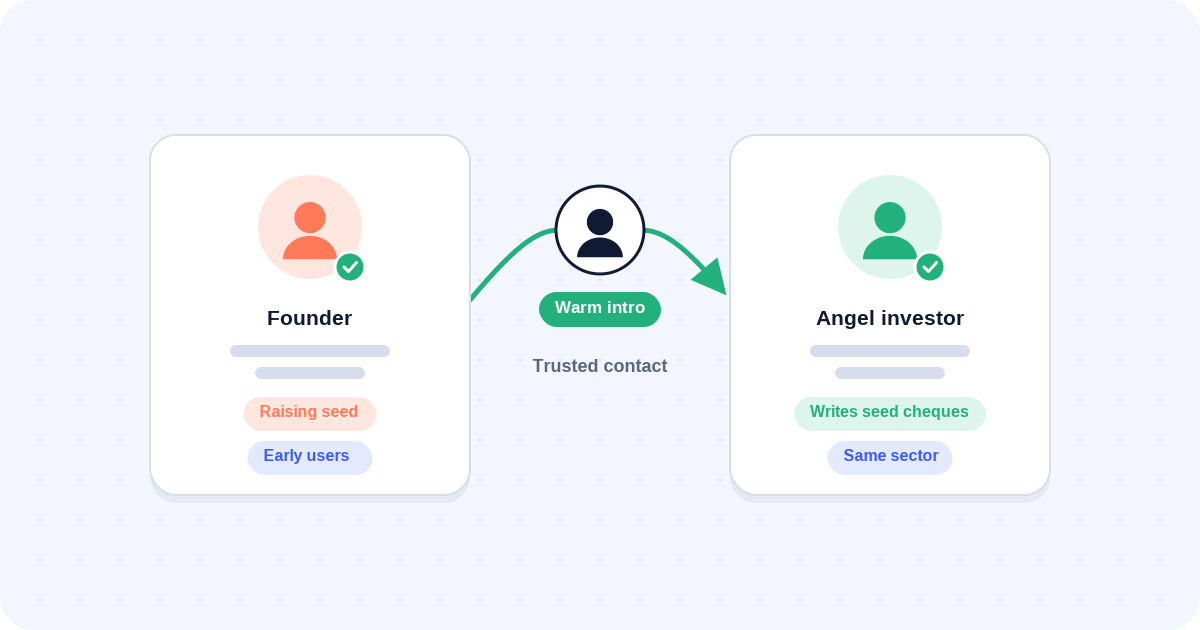
How investors actually find startups
From the outside, fundraising looks like sending a deck to as many inboxes as possible. From the investor's side, it looks very different. Angels and early-stage funds see far more pitches than they can read, so they lean heavily on signals they trust:
- Introductions from founders they backed. The strongest signal, because the founder knows both sides.
- Operators and advisers in their network. People who have worked with you can vouch for how you work.
- Other investors. Angels often share deals with each other.
- Accelerators and demo days. A programme has already done some of the filtering.
- Founder events and communities. Investors go where good founders spend time.
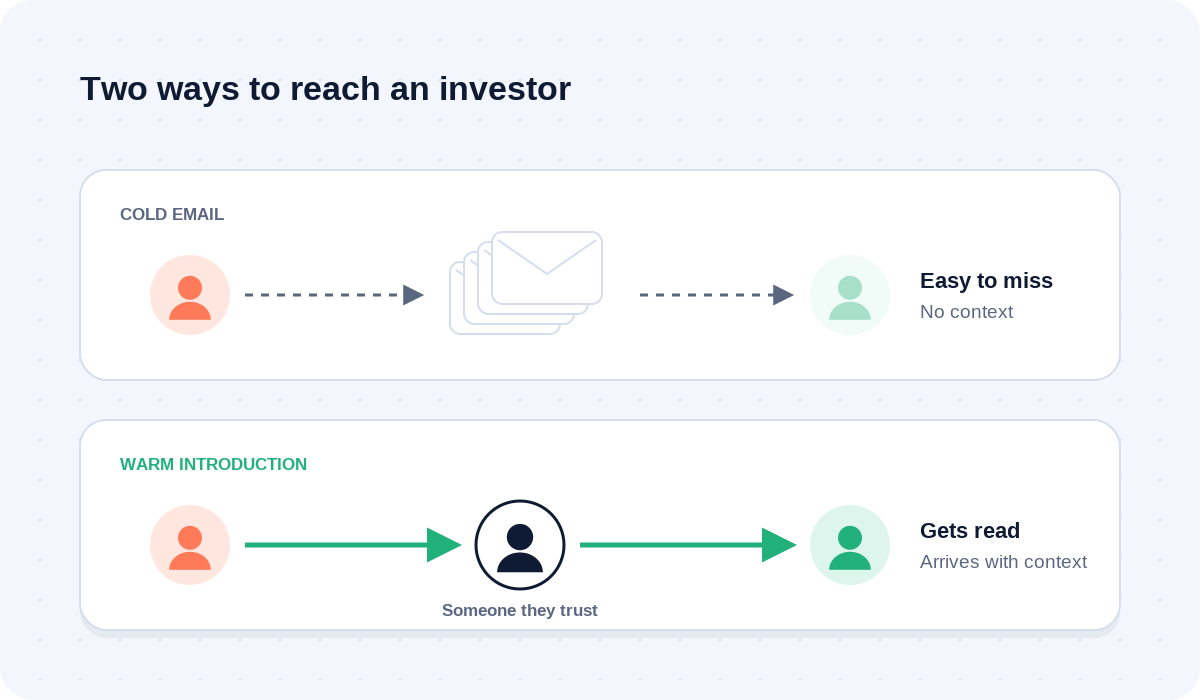
Cold email still works sometimes, but it is the hardest path. Your aim is to show up through as many of the trusted channels as you can.
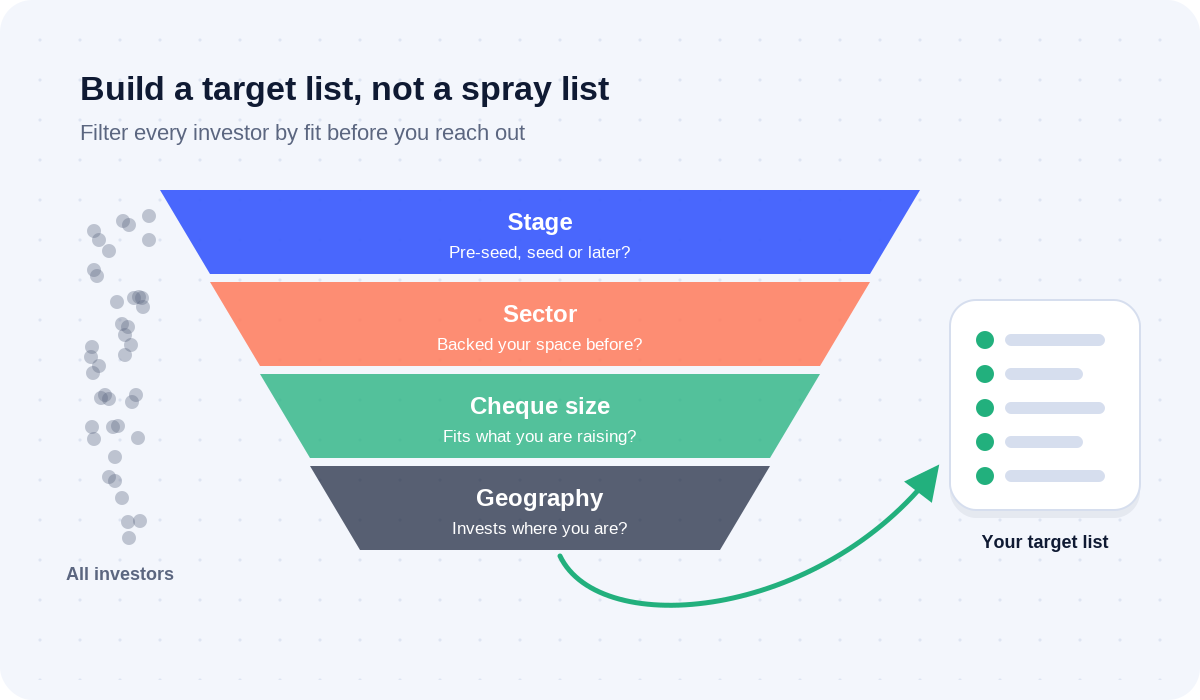
Step 1: Build a target list, not a spray list
Fifty well-matched investors beat five hundred random ones. For each investor, note:
- Stage: do they write pre-seed, seed, or later cheques?
- Sector: have they invested in your space, or in something close to it?
- Cheque size: does it fit what you are raising?
- Geography: do they invest where you are based?
- Conflicts: have they backed a direct competitor?
Rank the list and focus on the top tier first.
Step 2: Map your warm paths
For every investor on your list, ask: who do I know who knows them? Look at the founders in their portfolio, your former colleagues, your advisers, and people you met at events.
When you ask for an introduction, make it effortless. Write a short note the person can forward as it is: who you are, what you are building, the proof you have, and what you are raising. The easier you make it, the more introductions you get.
Step 3: Create new paths when you have none
No network yet? Build one, starting now:
- Go to founder events and meetups where investors speak or attend.
- Apply to accelerators and pitch competitions.
- Share what you are building in communities in your field.
- Ask every founder you meet who invested in them and whether they would introduce you.
- Use startup matching platforms where investors are present and verified.
Every real conversation is a possible path to the next investor.
Step 4: Run a tight process
Investors move faster when they know others are interested. Try to:
- Send introductions in batches so first meetings land in the same few weeks.
- Follow up within a day of every meeting.
- Keep a simple tracker: who you met, next step, and date.
- Share honest updates with investors who said "too early". Progress turns some no's into yes's.
How S.U.M helps you find investors
S.U.M, the verified startup matching app, brings founders and investors into the same verified network. Founders pick the Meet investors or Raise seed funding lane. Investors and seed funders join with the "I'm an investor" lane. S.U.M then shows people by place and intent, and profiles carry stage, funding and commitment, so both sides know the context before the first call.
There is no cold-pitch inbox. Conversations start only after a mutual match, then continue over chat and video. Every member verifies with LinkedIn or Instagram, and no paid plan can buy a higher spot in anyone's deck.
S.U.M is in early access. Join the waitlist and choose your lane; the iOS, Android and web apps are on the way.
Related: Raise seed funding · For investors: find startups to invest in · How S.U.M works
Related lane: Find investors