
Blog
How to Find a Co-Founder When You Don't Know Anyone in Startups
A practical guide to finding a co-founder from scratch: where to look, what to check, and how to test fit over chat and video before you commit.
S.U.M Team · 2026-11-24
Short answer: to find a co-founder with no network, go where people are already building (meetups, hackathons, founder communities and startup matching apps), look for skills that fill your gaps rather than copy yours, and test the partnership on a small real project before you agree on equity. Fit is proven by working together, not by a great first conversation.
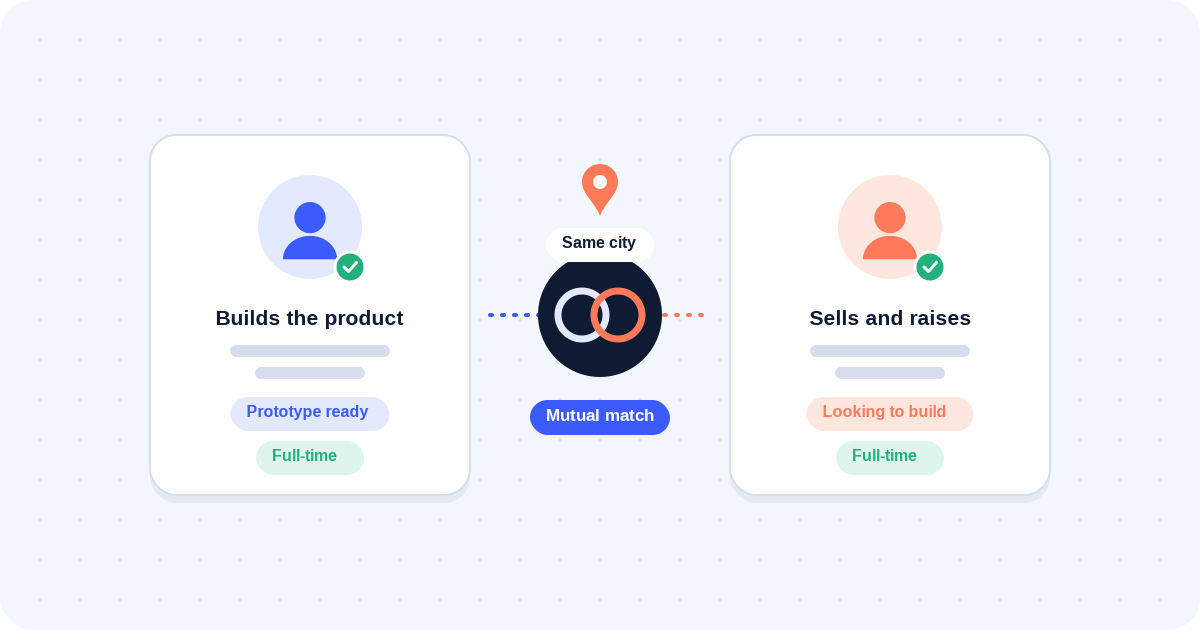
Why finding a co-founder feels impossible at first
Most advice assumes you already know people: "ask your old colleagues", "talk to your college friends". If you are new to a city, new to tech, or simply new to startups, that advice is useless.
The real problem is not that good co-founders don't exist. It is that you can't see them. The people you want are busy building, and they rarely announce that they are looking. Your job is to put yourself where they already are, and to make it easy for the right person to recognise you.
Step 1: Know what you are actually looking for
Before you meet anyone, write down three things:
- What you bring. Be honest. Can you build the product? Can you sell? Do you know the industry deeply?
- What is missing. The gap is usually the skill you find hardest or least interesting.
- What you won't compromise on. Full-time commitment, location, ambition, how you treat people.
This list stops you from choosing someone just because they are likeable and available.
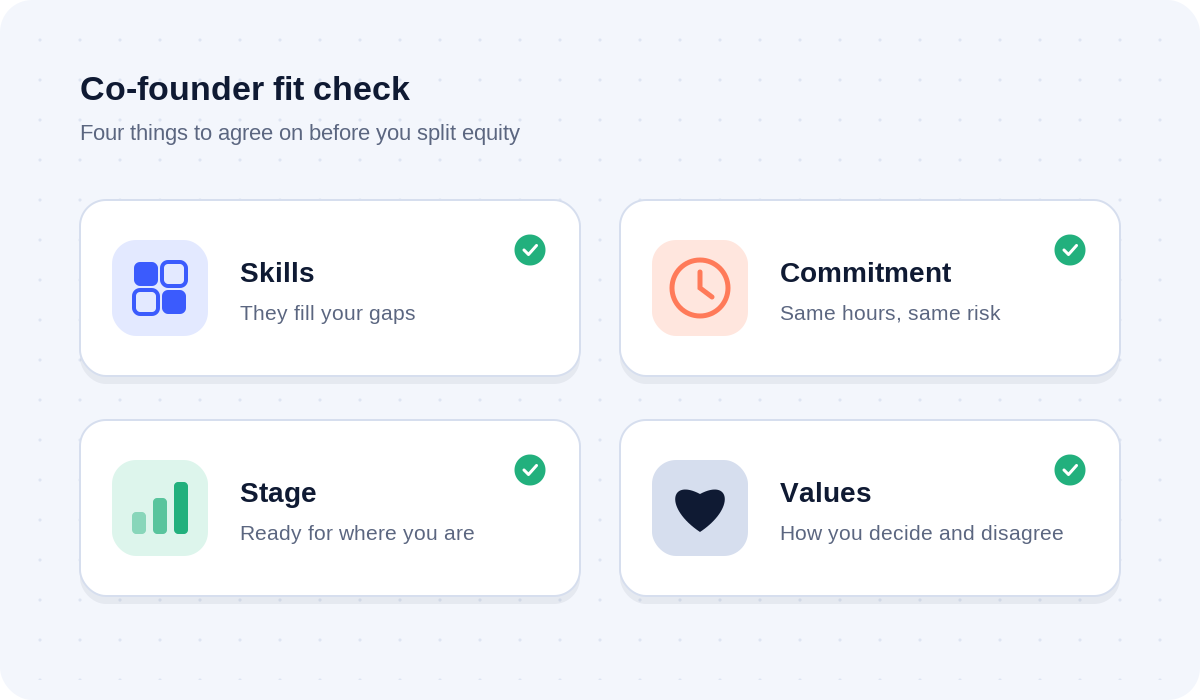
Step 2: Go where builders already are
Good places to meet potential co-founders:
- Hackathons and build weekends. You see how people work under pressure, which is the closest thing to startup life.
- Founder meetups and demo nights. Look for events where people present what they are building, not just networking drinks.
- Accelerator and incubator communities. Many run open events, office hours and co-founder mixers.
- Online communities in your field. Developer, design and industry groups where people share real work.
- Startup matching apps. Platforms built for startup people let you filter by intent, so everyone you meet is there for the same reason.
The common thread: pick places where people show what they do, not just what they want.
Step 3: Make yourself easy to find
The right co-founder is also searching. Help them recognise you:
- State clearly what you are building, or what problem you want to solve.
- Say what stage you are at: idea, prototype, early users, revenue.
- Be specific about the role you need filled and the commitment you expect.
- Show proof of work: a demo, a landing page, a few customer conversations.
A vague "looking for a technical co-founder for my app idea" gets ignored. "Building scheduling software for dental clinics, talked to 15 clinic owners, need a full-stack co-founder in Bengaluru" gets replies.
Step 4: Test fit before you commit
Treat the first weeks like a trial, not a marriage. A simple structure:
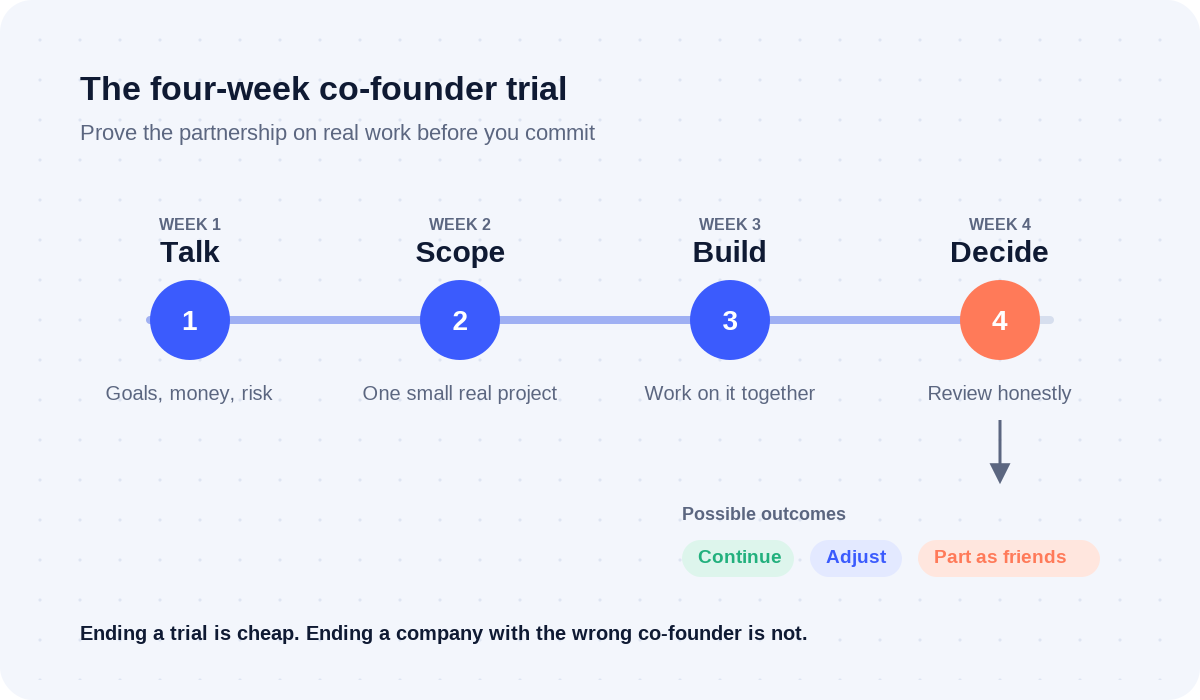
- Week 1: Talk. Several long conversations, including at least one video call. Discuss why you are each doing this, money, risk and how you handle conflict.
- Week 2: Scope. Agree on one small, real project with a clear deliverable.
- Week 3: Build. Work on it together. Watch how decisions get made and how disagreements end.
- Week 4: Decide. Review honestly. Continue, adjust, or part as friends.
If it is not working, ending a trial is cheap. Ending a company with the wrong co-founder is not.
Step 5: Put the agreement in writing
Once you are both in, agree on the basics before you incorporate or raise money:
- Roles and titles
- Time commitment and start dates
- Equity split, with vesting and a cliff
- How decisions get made when you disagree
- What happens if someone leaves
Write it down, then have a lawyer turn it into proper documents. Uncomfortable conversations now prevent expensive ones later.
How S.U.M helps you find a co-founder
S.U.M, the verified startup matching app, is built for exactly this search. You pick a lane (Build or Find co-founders), and S.U.M shows you verified people nearby by place and intent. Profiles show stage, funding and commitment up front. There is no feed and no job posts. When you both like each other's profile, you match and continue over chat and video, which makes the trial process above easy to start.
Every member verifies with LinkedIn or Instagram, so you are talking to real people. Paid plans widen your reach to more cities and countries, but they never buy a higher spot in anyone's deck.
S.U.M is in early access. Join the waitlist with the Build lane, and the iOS, Android and web apps will reach you as soon as invites open.
Related: Hire for your startup without job posts · How S.U.M works · How we verify members
Related lane: Find a co-founder